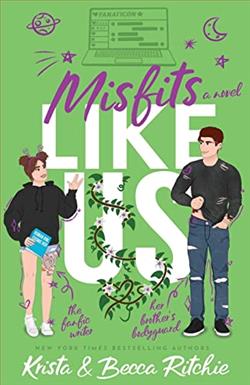
Misfits Like Us by Krista Ritchie and Becca Ritchie is a compelling exploration of acceptance, personal growth, and love, woven into the complex tapestry of family dynamics and societal expectations. This novel, not just a romance but a heartfelt narrative, delves deep into the lives of its characters, presenting them with their unique challenges and triumphs, making it a poignant addition to the Like Us series which is already celebrated for its in-depth character development and authentic emotional engagements.
The book follows the journey of Johanna Cobolt, an heiress struggling to navigate her identity both within and outside her influential family. Her challenges are compounded by the public's relentless scrutiny and the heavy expectations to uphold her family's legacy. Johanna's character is beautifully crafted, the layers of her personality are peeled back through scenarios that are both heart-wrenching and relatable, marking her as a memorable and inspiring protagonist. Her vulnerability, intertwined with her strength, paints a dynamic portrait of a young woman on a path to self-discovery.
Adding depth to Johanna's narrative is her romantic involvement with Walcott "Fitz" Cannon, another character brilliantly fleshed out by the authors. Fitz, who brings his own set of complexities and issues, stands as an intriguing counterpart to Johanna. He does not just serve as a love interest but adds significant value to the thematic core of the story—acceptance of one’s flaws and imperfections in a world that often demands perfection. The romance between Johanna and Fitz is crafted with a careful balance of sweetness and struggles, making their relationship realistic and engaging. Their chemistry is palpable, filled with moments that are both tender and fraught with tension, reflecting the unpredictable nature of real-life relationships.
The authors’ portrayal of mental health in this narrative deserves commendation. With sensitivity and accuracy, they delve into issues like anxiety and self-esteem, which are pivotal to both Johanna and Fitz’s character arcs. Instead of superficially skimming these aspects, Krista and Becca Ritchie integrate them into the storyline in ways that highlight the characters' battles and victories, making their stories resonate with those who face similar concerns. It is this deep, thoughtful portrayal that sets Misfits Like Us apart from typical romance novels.
The narrative structure of the book maintains a brisk pace, propelled by witty dialogues and a series of emotional revelations that keep the reader engaged. The Ritchie sisters demonstrate a remarkable ability to write scenes that seamlessly combine dialogue with inner monologues, enhancing the reader's understanding of each character's internal conflicts and desires. This not only serves to advance the plot but also enriches the reader’s engagement with the characters’ emotional landscapes.
A particular strength of this novel is how it addresses the theme of family. The familial relationships in Misfits Like Us are depicted with an incredible depth of emotion and complexity. The Cobolt family is portrayed not just as a background element but as an integral part of Johanna's life that influences her reactions and decisions. The dynamics within the Cobolt family, with their intricacies and tensions, contribute significantly to the story, providing a broader social context to the personal growth of the characters.
The setting and cultural references in the novel also add layers to the narrative, crafting a realistic backdrop that reflects contemporary societal trends and the lifestyles of the rich and famous. The authors’ attention to detail in describing settings and events enhances the visual imagery of the book, pulling readers deeper into the world they have created. Moreover, the inclusion of diverse characters in terms of ethnicity and sexuality is handled with respect and authenticity, highlighting the authors’ commitment to representing diversity meaningfully.
While the novel excels in many areas, it may face criticism from readers who prefer a more simplistic or traditional romance. The complex inner workings of each character and the intense focus on personal development might not cater to all tastes as some may find it overly detailed or emotionally heavy. However, for those who appreciate a deeper dive into character psychology and growth alongside romance, Misfits Like Us is undoubtedly rewarding.
In conclusion, Misfits Like Us is more than just a love story; it is a powerful narrative that challenges the boundaries of the romance genre to encompass themes of mental health, family, and self-acceptance. The Ritchie sisters have crafted a novel that is both enlightening and entertaining, filled with characters that linger long after the last page is turned. It is a must-read for fans of the series and new readers alike, promising a journey that is as intellectually satisfying as it is emotionally enriching.