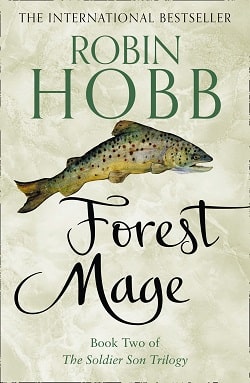
In Forest Mage, the second installment of Robin Hobb's Soldier Son trilogy, readers are thrust deeper into a world where the clash between dark mysticism and the encroaching forces of civilization creates a rich tapestry of conflict and introspection. Picking up from the events of Shaman's Crossing, this volume continues the journey of Nevare Burvelle, a character whose struggles resonate with themes of identity, societal expectations, and the consequences of cultural imperialism.
Hobb's narrative begins with Nevare returning home after a devastating plague has ravaged his military academy. The plague serves as a catalyst for Nevare's transformation, both physically and emotionally. Instead of the lean, disciplined soldier he was trained to be, he finds himself inexplicably gaining weight, a condition that leads to his disownment by his father and a drastic shift in his social standing. This transformation is not merely a physical one; it symbolizes the internal conflict Nevare faces as he grapples with his identity in a world that has suddenly turned against him.
One of the most compelling aspects of Forest Mage is its exploration of cultural homogenization and the struggle for survival faced by the Specks, a marginalized group with a deep connection to nature and powerful magic. Hobb deftly contrasts the Specks' primal, nature-based spirituality with the advancing technology and societal norms of Nevare's world. This juxtaposition raises critical questions about the cost of progress and the sacrifices made in the name of civilization. The Specks, with their dapple-skinned appearance and mystical abilities, serve as a poignant reminder of the fragility of cultural identity in the face of overwhelming societal change.
As Nevare's journey unfolds, readers witness his evolution from a privileged nobleman's son to a man caught in the crossfire of societal expectations and personal desires. His work as a cemetery guard in a frontier town symbolizes his fall from grace, yet it also becomes a space for introspection and growth. Hobb's portrayal of Nevare's internal struggles is profound; he is a character who embodies the tension between duty and self-acceptance. The weight he carries—both literal and metaphorical—becomes a powerful symbol of the burdens imposed by family, society, and his own expectations.
Hobb's writing is characterized by its lyrical prose and vivid world-building. The landscapes she crafts are not just backdrops but living entities that reflect the emotional states of her characters. The forests, with their ancient magic, become a character in their own right, embodying both beauty and danger. Hobb's ability to create a sense of place enhances the reader's immersion in the story, making the stakes feel all the more real. The natural world is depicted with a reverence that echoes contemporary themes of environmentalism and the need for a harmonious relationship with nature.
Character development is another area where Hobb excels. Nevare's relationships with other characters, particularly with the Specks, are nuanced and complex. His interactions with them challenge his preconceived notions and force him to confront his biases. The Specks are not mere caricatures; they are fully realized individuals with their own histories, struggles, and strengths. This depth adds layers to the narrative, making Nevare's journey toward understanding and acceptance all the more impactful.
However, as noted in the blurb, Forest Mage does suffer from what is often referred to as "middle-volume syndrome." The pacing can feel uneven at times, with certain plot threads lingering without resolution. This can be frustrating for readers eager for a satisfying conclusion, especially given the weight of the themes Hobb is exploring. Yet, this sense of incompleteness also serves to heighten anticipation for the final installment, Renegade Magic, as readers are left yearning for resolution and clarity in Nevare's journey.
In comparison to other works in the fantasy genre, Hobb's approach is reminiscent of authors like Ursula K. Le Guin and N.K. Jemisin, who also weave intricate narratives that explore the intersections of culture, identity, and power. Like Le Guin's Earthsea series, Hobb's work delves into the complexities of human nature and the moral dilemmas faced by individuals in a rapidly changing world. Similarly, Jemisin's Broken Earth trilogy addresses themes of oppression and survival, echoing the struggles faced by Nevare and the Specks.
Overall, Forest Mage is a powerful continuation of the Soldier Son trilogy that challenges readers to reflect on their own beliefs about identity, culture, and the environment. Hobb's masterful storytelling, combined with her rich character development and thematic depth, makes this book a significant contribution to the fantasy genre. While it may not provide all the answers, it invites readers to ponder the complexities of life and the choices that shape our destinies. As we await the concluding volume, Nevare's journey remains a compelling exploration of what it means to belong in a world that often seeks to divide.