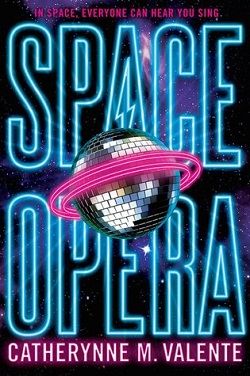
Space Opera by Catherynne M. Valente is a dazzling and audacious romp through the cosmos that combines the flamboyance of a musical with the high stakes of intergalactic politics. Set against the backdrop of a galaxy still reeling from the devastation of the Sentience Wars, Valente crafts a narrative that is as much about the absurdity of existence as it is about the power of art and performance to unite disparate beings. The premise is both whimsical and darkly humorous, as it juxtaposes the fate of entire species with the glittering spectacle of a galactic talent show.
The story revolves around Decibel Jones and the Absolute Zeroes, an unlikely band of misfits chosen to represent Earth in the Metagalactic Grand Prix—a competition that is part gladiatorial contest, part beauty pageant, and part concert extravaganza. The stakes are incredibly high: failure to impress could mean the annihilation of humanity. This absurdity is a hallmark of Valente's style, where she deftly blends humor with existential dread, making readers question the very nature of intelligence and what it means to be sentient.
One of the most striking themes in Space Opera is the idea of performance as a means of survival. In a universe where the fate of entire civilizations can hinge on a song or a dance, Valente explores the transformative power of art. The characters must not only showcase their talents but also navigate the complexities of their identities and the expectations placed upon them. This theme resonates deeply in a world where art often serves as a refuge and a means of expression in times of crisis.
Valente's character development is rich and multifaceted. Decibel Jones, the lead singer, is a flawed yet relatable protagonist. He grapples with his past, his insecurities, and the weight of representing humanity on such a grand stage. His journey is one of self-discovery, as he learns to embrace his identity and the power of his voice. The supporting characters, including the eccentric members of the Absolute Zeroes, are equally well-drawn, each bringing their unique quirks and backgrounds to the narrative. Valente's ability to create a diverse cast of characters, each with their own struggles and triumphs, adds depth to the story and reflects the broader theme of unity in diversity.
The world-building in Space Opera is nothing short of spectacular. Valente paints a vivid picture of a galaxy teeming with life, from the bizarre and fantastical to the familiar. The various alien species and their cultures are richly imagined, showcasing Valente's creativity and attention to detail. The Metagalactic Grand Prix itself is a kaleidoscope of colors, sounds, and emotions, a fitting backdrop for the drama that unfolds. Valente's prose is lyrical and evocative, drawing readers into this vibrant universe and making them feel the stakes of the competition.
Another significant aspect of the book is its commentary on the nature of competition and the absurdity of societal expectations. The Grand Prix serves as a microcosm of the larger universe, where power dynamics, prejudices, and the desire for recognition play out in exaggerated forms. Valente cleverly critiques the often superficial nature of fame and success, highlighting how easily the line between art and entertainment can blur. This commentary is particularly relevant in today's world, where reality television and social media have transformed the landscape of performance and celebrity.
Valente's humor is sharp and often absurd, providing a delightful counterpoint to the more serious themes of the narrative. The dialogue is witty and filled with clever wordplay, making for an engaging reading experience. The author’s knack for blending the ridiculous with the profound ensures that readers are both entertained and challenged, prompting them to reflect on the deeper implications of the story.
In comparison to other works in the science fiction genre, Space Opera stands out for its unique blend of musicality and existential inquiry. While authors like Douglas Adams and Terry Pratchett have similarly employed humor and absurdity in their narratives, Valente's approach is distinctly her own. She infuses her story with a sense of urgency and emotional depth that resonates with contemporary readers, making it feel both timeless and timely.
Overall, Space Opera is a triumph of imagination and creativity. Catherynne M. Valente has crafted a narrative that is as entertaining as it is thought-provoking, inviting readers to consider the power of art, the complexities of identity, and the absurdity of existence. The book's vibrant characters, rich world-building, and sharp humor make it a must-read for fans of science fiction and fantasy alike. As Decibel Jones and the Absolute Zeroes take the stage, readers are reminded that sometimes, the most profound truths can be found in the most unexpected places—like a galactic talent show where the fate of humanity hangs in the balance.