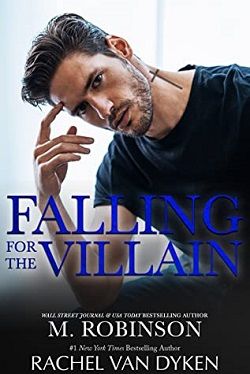
Falling for the Villain by M. Robinson and Rachel Van Dyken is a gripping standalone dark romance that delves into the complexities of love, power, and the blurred lines between captor and captive. The narrative unfolds through the eyes of Juliet, a character who finds herself ensnared in a world that challenges her perceptions of fear, desire, and ultimately, freedom. The authors, both of whom have established themselves as titans in the romance genre, weave a tale that is as provocative as it is enthralling, inviting readers to explore the darker facets of human relationships.
The premise of the story is both intriguing and unsettling. Juliet is kidnapped by a man whose motives remain shrouded in mystery. This initial setup creates a palpable tension that permeates the narrative. The authors skillfully craft a sense of urgency and danger, drawing readers into a world where trust is a luxury and survival is paramount. The repeated whisper of “Play for me, Juliet” serves as a haunting refrain that encapsulates the power dynamics at play. It is a phrase that signifies not only the control her captor exerts over her but also the complex emotional responses it elicits within her.
One of the most compelling aspects of Falling for the Villain is the character development. Juliet is not merely a passive victim; she evolves throughout the story, grappling with her circumstances and her feelings towards her captor. The authors do an exceptional job of portraying her internal conflict as she navigates her fear and burgeoning desire. This duality is what makes her character relatable and multifaceted. Readers witness her transformation from a frightened captive to a woman who begins to embrace her situation, challenging the very notion of what it means to be a victim.
Her captor, whose identity and motivations are gradually revealed, is equally complex. He embodies the archetype of the villain, yet the authors provide layers to his character that invite empathy. His dark world is not just a backdrop; it is a character in its own right, influencing the actions and decisions of both him and Juliet. The interplay between them is electric, filled with tension and an undeniable chemistry that complicates their relationship. As the story progresses, readers are left questioning the nature of their bond—can love truly flourish in such a twisted environment?
The themes explored in Falling for the Villain are both provocative and thought-provoking. The narrative challenges conventional notions of love and power, pushing readers to confront their own beliefs about consent, desire, and the nature of relationships. The authors do not shy away from the uncomfortable aspects of their story; instead, they embrace them, encouraging readers to step outside their comfort zones. This willingness to explore darker themes sets the book apart from typical romance novels, making it a noteworthy addition to the genre.
Moreover, the writing style of Robinson and Van Dyken is engaging and immersive. Their prose flows effortlessly, drawing readers into the emotional landscape of the characters. The dialogue is sharp and often laced with tension, reflecting the high stakes of Juliet’s predicament. The pacing is well-balanced, with moments of intense action interspersed with quieter, introspective scenes that allow for character development and emotional depth.
In comparison to other dark romance novels, Falling for the Villain stands out for its nuanced portrayal of the captor-captive dynamic. While many stories in this subgenre tend to glorify toxic relationships, Robinson and Van Dyken take a more critical approach, prompting readers to reflect on the implications of such dynamics. This sets the book apart from works like Captive in the Dark by C.J. Roberts or Dark Notes by Pam Godwin, which, while compelling, often lean into the romanticization of abusive relationships. Instead, Falling for the Villain invites a more complex dialogue about the nature of love and power.
Ultimately, Falling for the Villain is a bold exploration of the darker sides of romance, offering readers a narrative that is as unsettling as it is captivating. The authors have crafted a story that challenges perceptions and invites introspection, making it a significant contribution to the dark romance genre. For those willing to embrace the discomfort that comes with such a narrative, this book promises a rewarding and thought-provoking experience.
In conclusion, M. Robinson and Rachel Van Dyken have delivered a powerful tale that resonates long after the final page is turned. With its rich character development, intricate themes, and engaging prose, Falling for the Villain is a must-read for fans of dark romance. It dares to ask the difficult questions and, in doing so, offers a fresh perspective on love, power, and the complexities of human relationships.