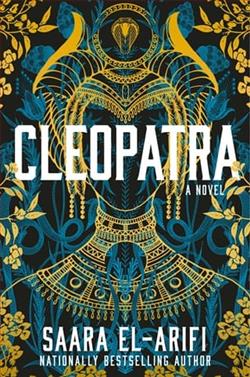
Saara El-Arifi’s Cleopatra is a mesmerizing dive into the life of one of history's most enigmatic figures. Known for her previous works like Faebound and The Final Strife, El-Arifi brings her signature blend of lyrical prose and intricate storytelling to this historical epic. The novel invites readers to see Cleopatra not just as the seductress or the witch that history often paints her to be, but as a multifaceted ruler whose life was as complex as it was extraordinary.
From the outset, El-Arifi challenges the traditional narratives surrounding Cleopatra. The book’s opening lines, "YOU KNOW MY NAME, BUT YOU DO NOT KNOW ME," set the tone for a story that seeks to reclaim Cleopatra’s voice from the annals of history. The author skillfully navigates the delicate balance between historical fact and creative fiction, offering a portrayal that is both authentic and refreshingly original. This is not merely a retelling of Cleopatra's life; it is an exploration of her inner world, her motivations, and her indomitable spirit.
The major themes of Cleopatra revolve around power, identity, and legacy. El-Arifi delves deep into the notion of power—not just political power, but the power of narrative and how it shapes our understanding of history. Cleopatra's story is one of a woman who wielded immense influence in a male-dominated world, and El-Arifi does not shy away from exploring the complexities of her rule. The theme of identity is also prominent, as Cleopatra grapples with her dual heritage as a Macedonian Greek ruling over Egypt. This duality is mirrored in her personal struggles and her public persona, making her a deeply relatable character.
Character development is one of the novel's strongest aspects. Cleopatra emerges as a fully realized character, her voice resonating with strength and vulnerability. El-Arifi’s Cleopatra is not just a queen; she is a mother, a lover, and a strategist. Her relationships with key figures such as Julius Caesar and Mark Antony are portrayed with nuance, highlighting her emotional depth and strategic acumen. The supporting characters are equally well-developed, each contributing to the rich tapestry of the narrative. El-Arifi’s portrayal of Cleopatra’s children, in particular, adds an emotional layer to the story, emphasizing her role as a protector and a mother.
The writing style in Cleopatra is evocative and sensuous, much like the queen herself. El-Arifi’s prose is lush and descriptive, painting vivid pictures of ancient Alexandria and the opulence of Cleopatra’s court. The author’s attention to detail is meticulous, immersing readers in the sights, sounds, and scents of the ancient world. Yet, despite the richness of the prose, the narrative remains accessible and engaging, drawing readers into Cleopatra’s world with ease.
Emotionally, the novel is a tour de force. El-Arifi captures the full spectrum of Cleopatra’s emotions—from her passionate love affairs to her fierce determination to protect her children and her kingdom. The emotional impact of the story is heightened by El-Arifi’s ability to convey Cleopatra’s internal conflicts and her resilience in the face of adversity. Readers will find themselves empathizing with Cleopatra, rooting for her, and mourning her losses. The novel’s emotional depth is reminiscent of works by authors like Hilary Mantel and Philippa Gregory, who similarly excel at bringing historical figures to life with empathy and insight.
In comparison to other historical novels, Cleopatra stands out for its bold reimagining of a well-known figure. While many authors have tackled Cleopatra’s story, El-Arifi’s approach is unique in its focus on Cleopatra’s voice and perspective. The novel challenges readers to reconsider their preconceptions about Cleopatra and to appreciate her as a powerful, strategic, and divinely blessed ruler. This fresh perspective is both enlightening and empowering, offering a new lens through which to view history.
Overall, Saara El-Arifi’s Cleopatra is a captivating and thought-provoking read that will appeal to fans of historical fiction and those interested in strong female protagonists. The novel’s blend of historical accuracy and imaginative storytelling makes it a standout in the genre. By giving Cleopatra a voice, El-Arifi not only reclaims her story but also invites readers to reflect on the narratives that shape our understanding of history. This is a book that will linger in the minds of readers long after the final page is turned, a testament to the enduring allure of Cleopatra and the power of storytelling.