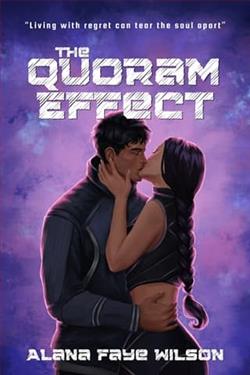
Alana Faye Wilson's "The Quoram Effect" is a captivating entry into the realm of adult Sci-Fi Fantasy, weaving a narrative that is as thought-provoking as it is entertaining. The novella immerses readers in a world where the celestial allure of Quoram—a planet of divine tranquility—serves as both a backdrop and a catalyst for the unfolding drama. Wilson deftly explores themes of love, regret, and the intricate dance of power and morality, all while maintaining a brisk pace that keeps the reader engaged from start to finish.
At the heart of "The Quoram Effect" is the poignant theme of regret and the consequences of past decisions. Remi, the protagonist, embodies this theme as she grapples with the repercussions of rejecting her Damson, Torz Benoit, nine years prior. Her journey is a testament to the enduring nature of love and the complexities of human emotions. Wilson's portrayal of Remi's internal conflict is both relatable and profound, capturing the essence of a woman torn between duty and desire. The emotional depth of Remi's character is reminiscent of the nuanced character studies found in the works of Ursula K. Le Guin, where personal growth is intertwined with larger societal issues.
Torz Benoit, the Delta Ring Commander, provides a compelling counterpoint to Remi's emotional turmoil. His position within a fascist society he despises adds layers to his character, making him more than just a romantic interest. Torz's moral dilemmas and the risks he takes to protect those under his command highlight the novella's exploration of power and responsibility. Wilson skillfully navigates these themes, drawing parallels to the ethical quandaries faced by characters in Isaac Asimov's science fiction, where the line between right and wrong is often blurred.
The writing style in "The Quoram Effect" is both vivid and engaging, with Wilson's descriptive prowess bringing the world of Quoram to life. The planet's healing oceans and rejuvenating air are depicted with a lyrical quality that enhances the otherworldly atmosphere. This attention to detail extends to the portrayal of the interfering god, whose mischievous nature adds an element of unpredictability to the narrative. Wilson's ability to blend humor with tension is reminiscent of Neil Gaiman's work, where divine figures often play pivotal roles in the human drama.
Emotionally, the novella resonates on multiple levels. The tension between Remi and Torz is palpable, their unspoken feelings simmering beneath the surface. Wilson captures the intensity of their connection with a deft hand, ensuring that their relationship remains central to the story without overshadowing the broader themes. The emotional stakes are further heightened by the looming threat of rebellion and the tyrannous governor's demands, creating a sense of urgency that propels the narrative forward.
In terms of genre, "The Quoram Effect" stands out as a unique blend of science fiction and fantasy, with its focus on personal relationships and moral dilemmas setting it apart from more traditional space operas. The novella's compact length does not detract from its impact; rather, it allows for a concentrated exploration of its themes, making it an ideal read for those who appreciate depth and complexity in their speculative fiction. Fans of authors like Anne McCaffrey and Octavia Butler will find much to admire in Wilson's ability to balance character-driven storytelling with imaginative world-building.
Overall, Alana Faye Wilson's "The Quoram Effect" is a remarkable addition to the Sci-Fi Fantasy genre, offering a rich tapestry of emotion, intrigue, and philosophical inquiry. Its exploration of love, regret, and the struggle for power is both timeless and timely, resonating with readers who seek stories that challenge and inspire. Wilson's novella is a testament to the enduring power of speculative fiction to illuminate the human condition, making it a must-read for enthusiasts of the genre.