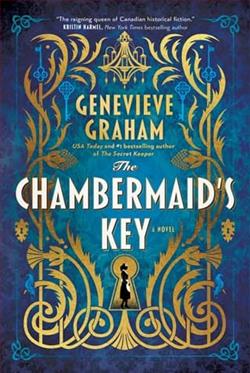
Genevieve Graham's latest novel, The Chambermaid's Key, is a captivating addition to the realm of Canadian historical fiction. Known for her ability to weave intricate tales that span generations, Graham once again delivers a story that is both engaging and thought-provoking. Set against the backdrop of the opulent Dominion Hotel in Toronto, the novel seamlessly intertwines two timelines: the late 1920s and the present day. This dual-timeline narrative is a hallmark of Graham's storytelling style, reminiscent of works by authors like Kate Morton and Kristin Hannah, where the past and present collide to unravel long-buried secrets.
At the heart of The Chambermaid's Key is Rosie Ryan, a young woman determined to escape the harsh realities of life in The Ward, Toronto's most impoverished neighborhood. Rosie's character is a testament to Graham's skill in crafting protagonists who are both relatable and inspiring. Her journey from a chambermaid to a woman entangled in a web of deceit and ambition is portrayed with depth and nuance. Rosie is not just a passive observer of the events around her; she is a catalyst for change, driven by her desire for a better life and her complex relationship with Damien, a charming waiter whose ambitions mirror her own.
Graham's portrayal of the 1929 setting is rich and immersive, capturing the essence of a city on the brink of economic collapse. The Dominion Hotel, with its gleaming chandeliers and polished marble, serves as a microcosm of the era's opulence and underlying decay. The author deftly explores themes of ambition and betrayal, as Rosie navigates a world where wealth and power are precarious and often illusory. The presence of a notorious gangster, poised to profit from the impending economic crash, adds a layer of tension and intrigue that keeps readers on the edge of their seats.
In the present day, Bridget Kelly, a city building inspector, takes center stage. Her character is a fascinating counterpart to Rosie, as she too is driven by a passion for uncovering the truth. Bridget's investigation into the Dominion Hotel's renovations leads her to discover mysterious boxes and secret corridors, echoing the secrets that Rosie encountered decades earlier. Graham's ability to draw parallels between the two timelines is masterful, creating a narrative that feels both cohesive and compelling. The dynamic between Bridget and the archivist she collaborates with adds a modern twist to the historical mystery, highlighting the enduring impact of the past on the present.
The writing style in The Chambermaid's Key is both elegant and accessible, a hallmark of Genevieve Graham's work. Her prose is evocative, painting vivid pictures of both the grandeur and the grit of 1920s Toronto. The dialogue is sharp and authentic, capturing the distinct voices of characters from different eras. Graham's attention to detail is evident in her meticulous research, which lends authenticity to the historical backdrop without overwhelming the narrative. This balance between historical accuracy and engaging storytelling is what sets Graham apart as a leading voice in Canadian historical fiction.
Emotionally, the novel resonates on multiple levels. The themes of ambition and betrayal are universal, yet Graham infuses them with a personal touch that makes them feel fresh and immediate. Rosie's struggle to rise above her circumstances and Bridget's determination to uncover the truth are both deeply relatable, reflecting the timeless human desire for justice and fulfillment. The emotional impact of the novel is further heightened by the suspenseful plot, which keeps readers invested in the characters' fates until the very end.
Comparisons to other works in the genre are inevitable, and The Chambermaid's Key holds its own among the best. Fans of dual-timeline narratives will find echoes of Kate Morton's intricate plots and Kristin Hannah's emotional depth. Yet, Graham's focus on Canadian history and her ability to create strong, multidimensional female protagonists give her work a distinctive edge. The novel's exploration of how the past shapes the present is reminiscent of Susanna Kearsley's historical fiction, yet Graham's voice remains uniquely her own.
In conclusion, The Chambermaid's Key is a testament to Genevieve Graham's prowess as a storyteller. It is a novel that not only entertains but also invites readers to reflect on the enduring nature of secrets and the power of ambition. With its richly drawn characters, evocative settings, and gripping plot, the book is a must-read for fans of historical fiction and anyone who appreciates a well-told tale. As the reigning queen of Canadian historical fiction, Graham once again proves why she holds such a title, delivering a novel that is both a page-turner and a poignant exploration of the human condition.