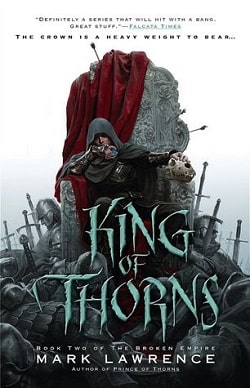
Mark Lawrence's King of Thorns, the second installment in the Broken Empire trilogy, is a masterclass in dark fantasy that delves deep into the psyche of its protagonist, Jorg Ancrath. Picking up where Prince of Thorns left off, this novel continues to explore the themes of power, revenge, and the moral ambiguity of leadership in a world rife with violence and betrayal.
At the heart of the narrative is Jorg, a character who is as complex as he is ruthless. Lawrence does not shy away from showcasing Jorg's darker tendencies; he is a prince who has been shaped by trauma and loss, and his journey is one of vengeance against those who have wronged him. The blurb aptly captures the essence of Jorg's character: "To reach greatness you must step on bodies." This line encapsulates the brutal reality of Jorg's world, where the cost of ambition is often measured in blood. As readers, we are drawn into Jorg's internal conflict, where the desire for power clashes with the remnants of his humanity.
Thematically, King of Thorns explores the nature of leadership and the sacrifices that come with it. Jorg is not a traditional hero; he embodies the anti-hero archetype, often making morally questionable decisions that challenge the reader's perception of right and wrong. Lawrence skillfully navigates this moral landscape, forcing us to confront uncomfortable truths about ambition and the lengths one might go to achieve their goals. The narrative raises poignant questions: Is the pursuit of power worth the cost of one's soul? Can a tyrant ever be a savior?
Character development is another strong suit of this novel. Jorg's evolution is compelling, as he grapples with his past and the consequences of his actions. The introduction of new characters, such as the champion leading the opposing army, adds depth to the story and serves as a foil to Jorg's character. This champion represents the ideals of nobility and honor, contrasting sharply with Jorg's pragmatic and often brutal approach to leadership. Their interactions highlight the complexities of power dynamics and the differing philosophies that govern their actions.
Lawrence's prose is both lyrical and visceral, painting a vivid picture of the Broken Empire. The world-building is rich and immersive, filled with intricate details that bring the setting to life. From the burning landscapes of war to the political machinations of the nobility, every element of the story is meticulously crafted. The author’s ability to balance the grand scale of the conflict with intimate character moments is commendable, allowing readers to connect with the characters on a personal level.
One of the most striking aspects of King of Thorns is its exploration of the consequences of violence. The battles are not glorified; instead, they are depicted with a stark realism that underscores the brutality of war. Lawrence does not shy away from showing the aftermath of conflict, the toll it takes on both victors and vanquished alike. This unflinching portrayal serves as a reminder of the human cost of ambition and the often-destructive nature of power.
In comparison to other works in the dark fantasy genre, such as Joe Abercrombie's The First Law series or George R.R. Martin's A Song of Ice and Fire, Lawrence's writing stands out for its psychological depth and character-driven narrative. While Abercrombie and Martin also explore themes of power and morality, Lawrence's focus on the internal struggles of his protagonist sets him apart. Jorg Ancrath is a character who elicits both revulsion and empathy, a testament to Lawrence's skill in crafting morally ambiguous figures.
The pacing of the novel is expertly handled, with a balance of action and introspection that keeps the reader engaged. Lawrence weaves multiple plot threads together, creating a tapestry of intrigue and suspense that culminates in a thrilling climax. The stakes are high, and the tension is palpable as Jorg faces insurmountable odds, forcing him to rely on cunning and strategy rather than brute strength.
Ultimately, King of Thorns is a profound exploration of the human condition, wrapped in the guise of a dark fantasy epic. It challenges readers to reflect on their own beliefs about power, morality, and the sacrifices we make in pursuit of our goals. Lawrence's ability to blend philosophical themes with a gripping narrative ensures that this book will resonate long after the final page is turned.
In conclusion, King of Thorns is a must-read for fans of dark fantasy and those who appreciate complex characters and morally ambiguous narratives. Mark Lawrence has crafted a tale that is as thought-provoking as it is entertaining, solidifying his place as a master storyteller in the genre. Whether you are drawn to the brutal realities of Jorg's world or the intricate web of political intrigue, this novel offers a rich and rewarding reading experience.