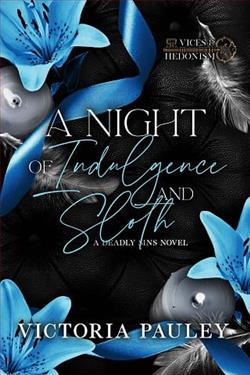
Victoria Pauley's A Night of Indulgence and Sloth is a compelling narrative that takes a well-trodden path and infuses it with fresh twists and emotional depth. The story begins with a familiar setup: orphaned siblings thrust into the care of a malevolent relative. However, Pauley skillfully navigates this classic trope, steering it into unexpected territories that keep the reader engaged and invested in the characters' journeys.
The protagonist's struggle to escape the clutches of a deranged uncle sets the stage for a tale that is as much about survival as it is about self-discovery. The psychological scars left by such a traumatic upbringing are palpable throughout the novel, and Pauley does an excellent job of portraying the protagonist's internal conflict. The narrative delves deeply into themes of trauma, resilience, and the quest for personal liberation, making it a poignant exploration of the human spirit's capacity to endure and overcome.
One of the novel's most striking aspects is its exploration of the protagonist's journey towards reclaiming control over her life. Her sister's insistence on moving forward and embracing happiness serves as a catalyst for change, leading to the pivotal decision to attend a party at Club Rapture. This setting becomes a transformative space where the protagonist experiences a night of liberation and indulgence, a stark contrast to her previously constrained existence. The club, with its hedonistic allure, symbolizes a world of possibilities and serves as a metaphor for the protagonist's burgeoning sense of freedom.
The introduction of the two men during this night of indulgence adds layers of complexity to the narrative. Their presence is not merely for romantic intrigue but serves as a mirror reflecting the protagonist's desires and fears. The revelation that one of these men is her new boss adds an intriguing dynamic to the story, blending professional boundaries with personal entanglements. This twist not only heightens the tension but also challenges the protagonist to confront her past and reassess her perceptions of trust and vulnerability.
Pauley's character development is noteworthy, particularly in how she portrays the protagonist's evolution. Initially, the protagonist is portrayed as a woman shackled by her past, hesitant to embrace the possibility of happiness. However, as the story unfolds, she emerges as a resilient and introspective individual, grappling with her demons while striving to carve out a new identity. The author deftly captures this transformation, making it both believable and inspiring.
The supporting characters, particularly the protagonist's sister, play crucial roles in propelling the narrative forward. Her sister's unwavering support and encouragement provide a counterbalance to the protagonist's internal struggles, highlighting the importance of familial bonds in the healing process. The two men, while initially enigmatic, are gradually fleshed out, revealing their own complexities and motivations. This adds depth to the story, preventing it from devolving into a simplistic love triangle.
In terms of thematic exploration, A Night of Indulgence and Sloth delves into the intricacies of trust, identity, and the impact of past traumas on present relationships. The novel raises thought-provoking questions about the nature of forgiveness and the possibility of redemption. Can one truly move on from a painful past, or are we forever haunted by our experiences? Pauley does not offer easy answers but instead invites readers to ponder these questions alongside the protagonist.
Comparatively, Pauley's work resonates with the emotional depth found in novels like Colleen Hoover's It Ends with Us and Taylor Jenkins Reid's The Seven Husbands of Evelyn Hugo. Like these authors, Pauley crafts a narrative that is both emotionally resonant and thought-provoking, drawing readers into a world where the characters' struggles feel authentic and relatable.
Overall, A Night of Indulgence and Sloth is a captivating read that combines elements of romance, drama, and psychological exploration. Victoria Pauley has crafted a story that is both entertaining and meaningful, offering readers a glimpse into the complexities of the human experience. The novel's ability to balance moments of lightness with profound emotional depth is a testament to Pauley's skill as a storyteller.
For readers seeking a novel that goes beyond the surface, exploring the intricacies of healing and self-discovery, A Night of Indulgence and Sloth is a must-read. Its blend of compelling characters, intricate plot twists, and thematic richness ensures that it will linger in the minds of readers long after the final page is turned.