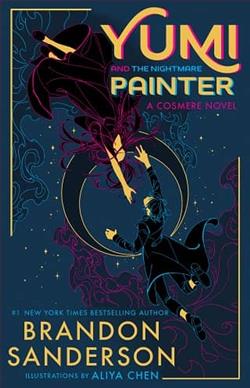
Brandon Sanderson's Yumi and the Nightmare Painter is a compelling addition to the Cosmere universe, a standalone novel that weaves a rich tapestry of fantasy, culture, and emotion. Known for his intricate world-building and complex characters, Sanderson once again delivers a narrative that is both immersive and thought-provoking. This novel, illustrated by Aliya Chen, is particularly appealing to fans of Asian pop culture, offering a unique blend of mythological elements and modern storytelling.
The novel introduces us to two distinct worlds: one shrouded in perpetual night, teeming with nightmares that manifest into reality, and another bathed in blinding light, where the act of stacking stones can summon miracles. These worlds are not just settings but characters in their own right, each with its own rules, challenges, and beauty. Sanderson's ability to create such vivid and contrasting environments is a testament to his mastery of the fantasy genre.
At the heart of the story are Yumi and Painter, two protagonists who are as different as their worlds. Yumi is a spirit-summoner, bound by tradition and duty, longing for a taste of normalcy. Her life is a series of rituals and responsibilities, and Sanderson captures her internal struggle with poignant clarity. On the other hand, Painter is a dreamer, patrolling the dark streets with aspirations of heroism that remain unfulfilled. His isolation and yearning for connection are palpable, making him a relatable and sympathetic character.
Their unexpected union is the catalyst for the novel's exploration of themes such as identity, duty, and the power of connection. Sanderson deftly navigates their journey, highlighting how their individual struggles and desires intertwine. The dynamic between Yumi and Painter is both heartwarming and complex, as they learn to understand and support each other while confronting their own fears and insecurities.
One of the most striking aspects of Yumi and the Nightmare Painter is its exploration of cultural expectations and personal freedom. Yumi's world is steeped in tradition, and her role as a spirit-summoner is both a privilege and a burden. Sanderson uses her character to delve into the tension between societal obligations and personal desires, a theme that resonates deeply in today's world. Painter's journey, meanwhile, is a testament to the power of dreams and the courage it takes to pursue them, even in the face of failure and loneliness.
The novel's pacing is well-balanced, with moments of introspection interspersed with action and suspense. Sanderson's prose is both lyrical and precise, capturing the beauty and danger of the worlds he has created. The illustrations by Aliya Chen add an extra layer of depth, bringing the characters and settings to life with stunning detail and artistry.
In comparison to Sanderson's other works, Yumi and the Nightmare Painter stands out for its focus on character development and emotional depth. While the epic scale and intricate plots of Mistborn and The Stormlight Archive are absent, this novel offers a more intimate and personal story that is no less impactful. Fans of Neil Gaiman's Neverwhere or Haruki Murakami's 1Q84 may find similar enjoyment in Sanderson's exploration of parallel worlds and the human condition.
Overall, Yumi and the Nightmare Painter is a beautifully crafted tale that will captivate both long-time fans of the Cosmere and newcomers alike. Sanderson's ability to blend fantasy with profound themes and relatable characters makes this novel a standout in his oeuvre. It is a story that lingers in the mind, inviting readers to reflect on their own lives and the connections that define them.
For those interested in exploring this enchanting world, the book is available on various platforms, including Goodreads.