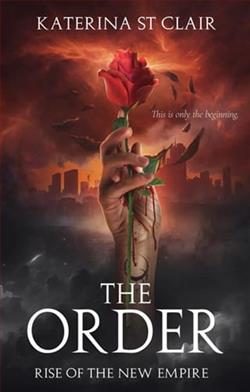
The Order: Rise of the New Empire by Katerina St. Clair is a thrilling foray into a dystopian world where power dynamics, ancient secrets, and a burgeoning rebellion converge to create a compelling narrative. As St. Clair’s debut novel, it astonishes with its intricate world-building and robust character development, establishing her as a promising voice in the genre.
The novel centers around the protagonist, Elara, who is thrust from her mundane life into the heart of a secret organization known as The Order. The revelation of her own latent powers and her heritage as part of a forgotten dynasty adds layers of intrigue to her character. St. Clair does a masterful job portraying Elara’s evolution from a sheltered bookstore owner to a potent figurehead in a brewing revolution.
St. Clair's narrative is intricate, weaving multiple viewpoints that enrich the story’s depth and provide a panoramic view of the political, social, and personal battles waging within the world she has crafted. The narrative style is both lush and evocative, capturing the stark contrasts of the world — from the oppressive architecture of the Empire’s capital to the rugged, hopeful landscapes of the rebel hideouts. Her prose often dips into poetic, luxuriously describing scenes that immerse readers fully into her darkly beautiful world.
The world-building in The Order is noteworthy. St. Clair constructs a universe where history and mythology intertwine seamlessly, creating a backbone for the novel that stands out for its originality. The lore of The Order, with its roots stretching back thousands of years, provides a rich tapestry that supports the story’s complex plot. Elements of ancient magic, forgotten technology, and dystopian governance blend into a setting that is both familiar and uniquely imaginative.
The secondary characters are just as well-drawn as Elara. From the enigmatic leader of The Order, Dorian, whose motivations remain shrouded in mystery, to Mira, Elara’s staunch and spirited rebel guide, each character is given a detailed backstory and a clear role in the narrative. The dynamics between these characters and Elara are portrayed with a keen insight into human nature and relationships. It is through these interactions that St. Clair explores themes of trust, betrayal, and the moral ambiguities of revolution.
However, one of the book’s most striking features is its antagonist. The Emperor, presented not just as a distant tyrannical ruler, but with depth and nuances, offers a refreshing take on the traditional ‘villain’ archetype. His interactions with Elara, filled with tension and an eerie sense of connection, add a thrilling psychological element to the novel.
Though the pace is quick, with plot twists and action sequences adeptly written to propel the story forward, there are moments where the rapid progression might leave readers yearning for moments of reflection. The balancing act between action and character introspection is mostly well-managed, but there are instances where the pace could have been tempered to allow deeper exploration of the emotional landscapes of the characters.
On a thematic level, The Order: Rise of the New Empire delves into complex discussions about power, freedom, and the cost of change. These themes are thoughtfully integrated into the plot, ensuring that the story carries weight beyond its entertainment value. The moral complexities of a rebellion, and the personal costs involved, are portrayed with a sensitivity and realism that resonate with current global narratives.
In conclusion, Katerina St. Clair’s The Order: Rise of the New Empire is a powerful debut that promises to become a significant series in the realm of dystopian fiction. With its strong female protagonist, richly detailed world, and a plot that deftly balances action with psychological depth, it holds its own as both a page-turner and a thoughtful examination of society and governance. While there are minor glitches in pacing, the overall craftsmanship of the novel showcases St. Clair's potential as a new luminary in the genre. This novel will likely not only captivate fans of dystopian narratives but also those intrigued by the exploration of power and resistance in a finely crafted fictional universe.