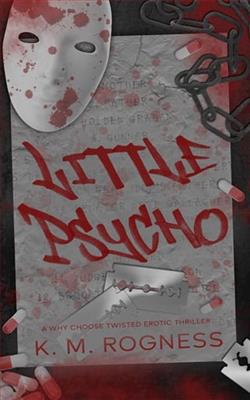
Little Psycho by K.M. Rogness achieves a chilling blend of psychological horror and dark comedy, crafting a narrative that is as unsettling as it is engrossing. The novel centers around the life of Elsie, a seemingly typical eight-year-old girl with a penchant for mischief. However, underneath her playful exterior lies a disturbing depth of cunning and a dark inclination towards manipulation and violence. Rogness masterfully peels back the layers of Elsie's psyche, revealing the complex interplay of innocence corrupted by a malevolent streak.
The book opens in the small, sleepy town of Harrow Lake, where Elsie lives with her parents and younger brother. From the onset, the author sets a moody tone, describing the misty landscapes and the claustrophobic household that becomes a crucible for Elsie's disturbing antics. The unsettling atmosphere is palpable as readers are introduced to Elsie's world through her interactions with family, friends, and teachers—each relationship meticulously depicted to enhance the sense of unease.
Rogness excels in character development. Elsie, as the protagonist, is portrayed with a complexity that defies the typical portrayal of children in fiction. Her intelligence and charismatic charm are juxtaposed with her manipulative behaviors and lack of empathy, characteristics that draw a parallel with the archetypical psychopath. This portrayal challenges readers' perceptions and elicits a mix of horror and fascination. Moreover, the secondary characters, including Elsie's parents and school friends, are also well-crafted, with their own fears, desires, and secrets adding layers to the narrative.
The plot of Little Psycho thickens as mysterious events begin to shroud Harrow Lake. Pets disappear, strange messages appear written in childish scrawl, and accidents that may not be accidents terrify the community. It's in these events that Elsie’s chilling role becomes apparent, as Rogness masterfully uses suspense and subtle clues to keep the reader guessing about Elsie's involvement and true nature. The interplay between what is revealed and what remains hidden serves to intensify the psychological thrills of the story.
Stylistically, Rogness employs a crisp, evocative prose that captures the innocence of childhood, while simultaneously infusing each scene with a sense of dread. The duality of tone is one of the novel’s greatest strengths, setting it apart from more straightforward horror or thriller novels. Moreover, the dark humor sprinkled throughout the narrative provides a necessary respite from the tension, though it is the kind of humor that one might find unsettling, given its context.
One of the standout elements of the book is its climax, which unfolds with both shock and inevitability. Rogness does not shy away from pushing boundaries, and the ending will likely leave readers pondering the nature of evil and the potential for darkness within everyone, especially the most seemingly innocent. The resolution of the plot is satisfyingly conclusive, yet it leaves enough ambiguity to keep the mind reeling.
However, Little Psycho is not without its potential pitfalls. Some readers might find the portrayal of Elsie disturbing enough to be off-putting due to the discomforting implications about childhood and innocence. Moreover, the pace of the novel might seem slow to those accustomed to action-driven horror or thriller novels. Rogness takes her time to build atmosphere and delve into psychological depth, which, while a strength in terms of storytelling, might not cater to all tastes.
Despite these minor critiques, Little Psycho is a compelling read for those who appreciate psychological depth and complexity in their horror fiction. It probes questions about nature versus nurture, the essence of evil, and the facades that people—children, in particular—can present to the world. Rogness has crafted a novel that is as thought-provoking as it is terrifying, making it a notable addition to the genre.
In conclusion, Little Psycho by K.M. Rogness should be approached with the caution that it is not for the faint of heart, nor for those seeking light reading. It is, however, a must-read for aficionados of psychological horror, who will appreciate its sophisticated narrative structure, its depth of character exploration, and its boldness in tackling uncomfortable subjects. Rogness's novel is a disturbing journey into the darkness that can lurk behind the most innocent of facades, making readers question how well they can truly know anyone—especially a child.