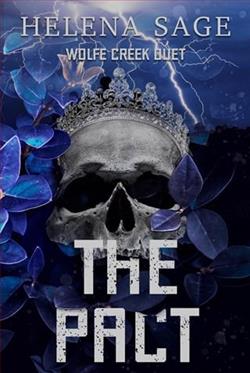
The intricacies of human relationships, particularly within the bounds of a seemingly idyllic suburban town, are adeptly woven into the narrative spine of "The Pact" by Helena Sage. At the surface, this book may appear to be another thriller entering into the well-trodden territory of secrets and lies. However, as readers delve deeper, they encounter a novel that breaches the typical boundaries of its genre to offer profound commentary on trust, sacrifice, and the consequences of our choices.
Helena Sage introduces us to the town of Redwood, a place that palpably pulses with undercurrents of unspecified tensions from the very first page. Central to this novel is the Forrest family—Daniel, Laura, and their teen son, Michael—who on the surface epitomize the American dream. Daniel's position as a prominent lawyer gives the family an apparently stable economic pedestal, juxtaposed sharply against Laura’s psychologically taut, stay-at-home mother persona and Michael’s burgeoning, if secretive, grappling with adolescence.
The plot ignites when Daniel is unexpectedly implicated in a crime he claims he didn't commit. It is here that "The Pact" postulates its central theme—would you lie to protect someone you love? From this moment onward, Daniel and Laura find themselves caught in a vortex of moral ambiguity. The real story, however, starts when Daniel discloses that he is part of a pact formed during his shadowy past; a pact that could bring their entire world crashing down around them.
It is in the portrayal of her characters that Sage truly excels. Laura’s transformation from a passive observer in her own life to a fiercely protective matriarch is both compelling and credible. Encountering her internal dialogues and moral struggles is akin to watching a high-wire act, beautifully balanced between dread and duty. Daniel, on the other hand, is etched with enough shadows to make the reader oscillate between sympathy and suspicion — a testament to Sage’s skill in character development.
What makes "The Pact" particularly captivating is its multi-layered plot. Unlike straightforward thrillers where the thrill is in the 'whodunit', here the core suspense swirls around 'how far will they go?' Every chapter peels back layers of the characters’ pasts and present, intertwining these revelations with ethical quandaries that challenge the reader’s own moral compass. Sage masterfully constructs these layers, leaving breadcrumbs that tempt one to guess at the truths lurking in Redwood’s perfectly manicured façades.
Moreover, the pacing of the story deserves special mention. The narrative swells and recedes like an ocean tide, perfectly timed to keep the reader on the edge. Just as one question seems answered, another arises, propelled by Sage’s crisp, clear prose that ensures the plot remains accessible and highly engaging without dipping into unnecessarily complex jargon or convoluted plot twists.
Yet, no book is without its flaws. Some might find "The Pact" somewhat predictable in its foundational elements. The trope of a suburban family caught in a web of crime and secrets isn’t novel. However, it’s Sage’s treatment of the subject—how she delves into the psychology of her characters, crafting a narrative that’s as much about individual moral dilemmas as it is about the thrilling external plot—that rejuvenates an otherwise familiar storyline.
In thematic depth, "The Pact" stands strong. It serves as a mirror reflecting our own potential for duplicity in the face of desperate circumstances. This narrative force coupled with its acute examination of familial love and its inherent obligations makes this book a standout. It does not simply ask "What would you do?" but rather "What wouldn’t you do?"—and it is in contemplating the potential darkness of our own answers that the book finds its true power.
In conclusion, Helena Sage's "The Pact" is a riveting synthesis of suspense and introspective drama. It’s a compelling tale that doesn’t just unfold; it unwraps the very fibers of its characters’ beings and, by extension, that of its readers. For those who are fans of thrillers but yearn for narratives that probe deeper than mere surface tension, this book will resonate profoundly. Ultimately, "The Pact" is not merely a story about the lengths one might go to protect loved ones—it’s a keen exploration of the boundaries we are willing to breach, and the external and internal fallouts of stepping over those lines.