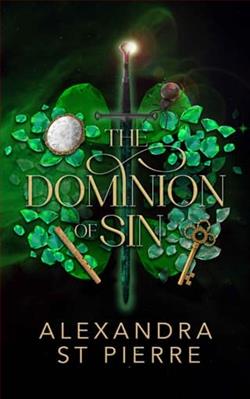
The Dominion of Sin by Alexandra St. Pierre dives into the dark and turbulent waters of human desires and the extreme lengths individuals are willing to go to fulfill them. As St. Pierre's debut novel, it ambitiously tackles themes of power, betrayal, and redemption, setting her narrative in a dystopian universe where sin isn’t just a moral failing, but a commodity to be traded and a source of power.
The book introduces us to the city of Eldoria, a society where the currency is sin. People commit transgressions to elevate their social status, monitored by a mysterious governing body known as the High Circle. The protagonist, Evangeline, is born into the lowest caste, the Unblessed, destined to live her life in squalor and hardship. However, her destiny takes a sharp turn as she discovers her unique ability to absorb others’ sins without suffering their divine punishments, setting her on a perilous path that could either distort or purify the rotten core of Eldoria.
St. Pierre crafts a world rich with lore and intrigue. Her descriptions of Eldoria are vivid, painting a city that is both mesmerizing and menacing. Readers will find the creative use of sin as a tangible element fascinating. This novel concept breathes fresh air into the dystopian genre, which often relies on familiar tropes of oppressive governments and rebellious protagonists. Here, the oppression is not only political but deeply spiritual and personal, making the stakes feel higher and the character’s journeys more introspective.
The characterization of Evangeline is one of the strongest points of the book. St. Pierre doesn’t shy away from complexity; she allows her heroine to be flawed, and sometimes morally gray, which makes her struggle and growth more compelling. Evangeline's journey from a passive sufferer of her fate to a powerful actor who challenges the status quo is as heart-wrenching as it is inspiring. Her interactions with secondary characters, including the enigmatic Lachlan and the fiercely loyal Mirabel, add layers to the narrative, each adding their own shades to the spectrum of sin and redemption.
However, The Dominion of Sin is not without its pitfalls. At times, the pacing feels uneven, particularly in the middle section where the philosophical musing can overshadow the plot, causing the middle of the book to lag. Additionally, the novel’s ambitious themes sometimes get the better of St. Pierre's otherwise tight narrative structure, leading to some scenes feeling overly didactic or unnecessarily convoluted.
Despite these minor issues, the climax of the book is thrilling—a satisfying convergence of its philosophical inquiries and the raw, emotional journeys of its characters. The final chapters are particularly potent, providing climactic revelations and resolutions that are unpredictable yet fitting. St. Pierre’s skill shines in how she ties up thematic elements around sin, agency, and accountability in a bow that is thought-provoking and emotionally resonant. Readers might find themselves lingering over the implications of the book’s ending, especially in how it challenges our perceptions of morality and justice.
On a stylistic note, St. Pierre’s prose is a delight. Her ability to weave complex narratives with a poetic touch is enviable. There are passages that are beautifully written, echoing the grand literary traditions of dystopian forebearers like Aldous Huxley and George Orwell, yet infused with a modern sharpness that speaks to contemporary issues. This stylistic prowess makes even the expository sections of the book—a necessity in any fantasy or dystopian novel—a pleasure to read.
One cannot review The Dominion of Sin without acknowledging its boldness in themes and execution. Alexandra St. Pierre has crafted a universe that feels both ethereal and brutally real, populated with characters who are deeply human in their desires and fears. The novel is a commendable exploration of the nature of sin and redemption, challenging readers to reflect on both the darkness and light within themselves.
In conclusion, The Dominion of Sin is a formidable debut, marking Alexandra St. Pierre as a promising voice in speculative fiction. While it navigates some familiar territory, the novel’s unique premise and emotional depth make it a standout. Readers looking for a thoughtful, provocative read that combines elements of fantasy, dystopia, and philosophical fiction will find The Dominion of Sin a rewarding experience. Despite its minor flaws in pacing and complexity, the journey it offers is undeniably impactful, making it a commendable and recommended addition to the genre.