Page 67 of Only the Fury
If there’s an actual human behind the plastic mask, does he even see me? Will my question nip at his humanity?
He doesn’t answer right away. For a second—maybe two, though my sense of time isn’t what it used to be—his gloved hand stills over the little tray of pills, and I let myself believe I’ve found something. A hairline crack. A person who has to go home after this and look at himself in a mirror and decide what kind of man does what he’s doing.
“Doesn’t matter why,” he finally says. “Matters that you’re more useful breathing.”
Breathing. Not healthy. Not okay. Useful, like I’m a piece of equipment they’re keeping charged. I should feel worse about that word than I do. Mostly I just feel tired.




Still. He answered. He didn’t have to. A crack of sorts.
Minutes pass, maybe hours, and I’m jostled. The same man, with the same mask, has pills and orange juice. He stands sentry until I swallow the pills.
There’s an old rule in half the stories I ever loved: Never eat what’s offered to you in the land of the fair folk. Take one bite of their bread, one sip of their wine, and you’re theirs. Doesn’t matter how it’s meant—as hospitality, as kindness, as a genuine gift. The taking is what binds you. Some poor mortal always learns it too late, always looks up from the feast to find seven years have passed, or that the door home has quietly closed while they weren’t watching it.
I used to think that story was about greed. Now I think it’s about desperation. Nobody in those tales refuses the food because they’re strong. They eat because they’re starving, or sick, or so far from anything familiar that a kind hand feels like it might be the only kind hand left in the world. The trap isn’t the food. The trap is how much you need someone, anyone, to be kind to you.
The orange juice might be drugged, but at this point, does it matter? I already crossed whatever threshold mattered days ago. I just didn’t get a folktale to warn me first.
I want to believe my team will find me. That at any moment, there will be the sound of firearms. Police sirens. That strong arms belonging to a serious man with a gruff voice will carry me away. But how?
I’ve failed all the tests. The man who approached on my back deck, calling up. I should’ve known. Walking around the back of my house…because of car trouble? He didn’t go to my front door? Why wasn’t I more suspicious?
I had a mug of coffee in my hand. I remember that much clearly—the pottery one from the craft fair, still warm. I remember setting it on the little table so I could stand and see who was calling, and I remember the chair scraping back too fast, catching on the deck board the way it always did.
I don’t remember it hitting the ground. I don’t remember if I dropped it while reaching for something or if it was still sitting there when everything else happened. I’ve replayed it so many times in this cell that I can’t tell anymore which parts are memory and which parts are just me filling in a gap because the not-knowing is worse than any version I could invent.
Why did I wait until he joined me on the deck, until he stood so close I saw the gleam of metal? Because I was lost in my own world—writing and deleting a text. Inviting Hudson to dinner, then changing my mind, because he should be coming to me. Writing him about a project, then deleting it because I’d done that. We didn’t stop communicating over work topics. I considered telling him about my trip to Charlotte—telling him that someone had been attempting to access my private files. Repeatedly.
But I thought it had to do with the ledger and I didn’t want to bring him into my mess.
If I’d told him, if I’d called, if I’d shared…would we be better off?
I’d give anything to go back to that morning on the deck. To turn around before he got close enough. To walk inside and call Hudson and tell him everything and that I’m scared and I don’t want to do this alone anymore. That’s what I would say if I could go back in time.
This isn’t how we end. It can’t be.
Chapter 21
Hudson




Present, Day 10
The call comes as I’m pulling onto the unmarked road that leads to the house.
“Syd. Tell me you found something.”
I’m not one for prayer, but damn if the desperation isn’t enough to force me to my knees.
“I’ve got a property. Ties to Reeves’s private security firm through a holding company. I found it while cross-referencing Quinn’s list you sent over. Where are you?”
“Pulling in. Where’s the structure?”
“Rural western Virginia. Used to be a decommissioned federal holding facility—not classified but not publicly listed.”
“Bingo.” My chest loosens ever so slightly and the tips of my fingers tingle. “That’s got to be it.”
I consider jumping out and running through the front door, but think twice about it and continue down the drive to pull into the garage. If anyone’s watching, it’s smarter to load up under cover—and now that we have an address, we will be loading up.
“I’m here. See you in a minute.”
Novels you may like ...


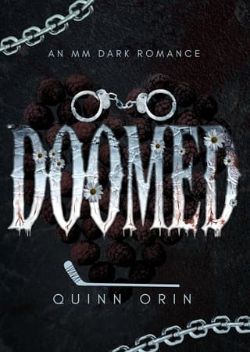
Doomed by Quinn Orin